
Tony Rolt Escaped POW Camps Seven Times Before Becoming a Famous Race Car Driver
It’s safe to say that Tony Rolt’s life after the Second World War was just as impressive as his time served overseas. Rolt is best known as a British racing driver, however, he is (rightfully) considered by many to be a war hero as well. Not only did he serve in overseas combat, but he was captured by the Germans and taken as a prisoner of war (POW) for the majority of the conflict.
Rolt was involved in the Siege of Calais, attempted seven escapes from POW camps, was sent to the highest security camp that the Germans ran, and went on to return home and win the 24 Hours of Le Mans race.
Life before the war
Rolt was born in Bordon, Hampshire but he was raised in Denbighshire, Wales. As a teenager, he attended Eton College in Berkshire which is when he got heavily involved with cars and racing. In fact, he got in trouble while at Eton for having a car, not to mention he lost his license for speeding at one point during his education. That didn’t stop him from racing, of course.
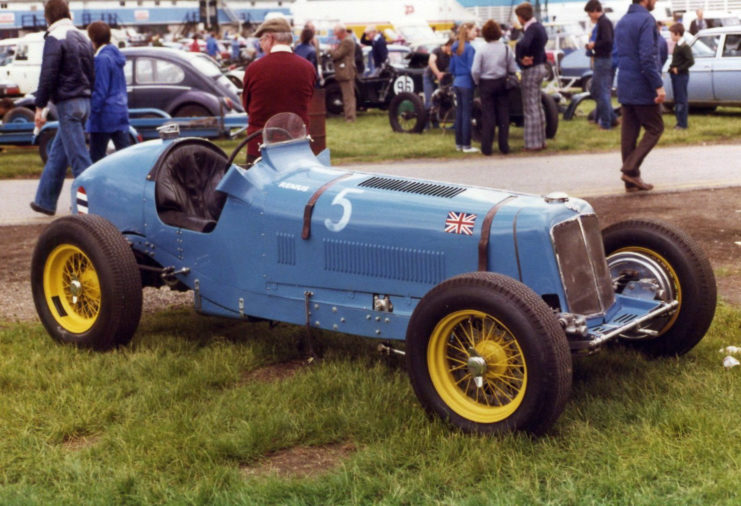
Rolt started racing in a Morgan three-wheeler before making his official track debut in 1936 with a Triumph Gloria Vitesse. He then moved on to a Triumph Dolomite. One of his most famous cars from before the war, however, was his English Racing Automobile (ERA) called Remus which he purchased from two princes that he attended Eton with.
In one race with this car, an issue developed with the exhaust which caused flames to shoot up into the driver’s seat. To solve the problem, Rolt took off his driving gloves, shoved one into the bolt hole that the flames were coming from, and went on to win the race. In 1939, he won the prestigious British Empire Trophy Race, setting him up for a future in racing.
Defense of Calais
That didn’t happen as quickly as Rolt would have liked, as war broke out the same year. The race car driver decided to join up like many other young men, joining the Royal Military College, Sandhurst, where he was commissioned to the Rifle Brigade as a lieutenant. By 1940, Rolt was sent to France where he was put in charge of a reconnaissance platoon.
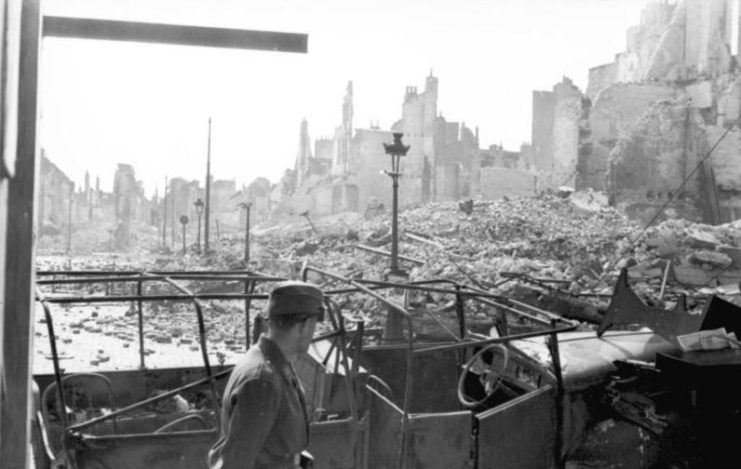
He and his men were quickly engulfed in the defense of Calais, one of the closest French ports to England across the English Channel. They were tasked with holding out against the 10th Panzer Division, which they managed to do for three days before their defenses broke just ahead of the evacuation at Dunkirk. During this time, Rolt aided one of his injured men while continuing to fire a British Bren gun, an act for which he was awarded the Military Cross.
Multiple escape attempts
Despite his bravery in combat, Rolt was one of the many soldiers taken as a POW by the Germans at the end of the battle, although he certainly showed his displeasure about this. He was passed through multiple different POW camps, mainly because he kept trying to escape: Oflag VII-C, Oflag V-B, Stalag XXI-D, Oflag VI-B, and Oflag VII-B. His first escape attempt took place before he even reached a camp.
He and another POW dove into a ditch when the guards weren’t looking and planned to steal a plane to fly home. In total, he attempted to escape seven times. In one instance, he managed to get within sight of the Swiss border using the fake documents of a German workman, earning himself 14 days in solitary confinement. In another instance, he and other POWs were able to dress as Red Cross volunteers.
Of the plan, Rolt said “It worked brilliantly. We watched them arrive, waited a suitable length of time and then walked out the main gate. We then walked for two nights using makeshift maps.” Although he and his comrades were able to board a train, they were still captured. As with many of the Allied POWs who were known to consistently escape, Rolt was eventually transferred to the maximum security prison Oflag IV-C on July 14, 1943.
Transfer to Colditz Castle
Colditz Castle, which had been turned into a POW camp during the war, was used to house those who had records of escape attempts. The design allowed the guards to keep close watch over terraces that surrounded the prisoners’ accommodations in an interior courtyard. Despite this arrangement, many of the POWs were still able to make escape attempts.
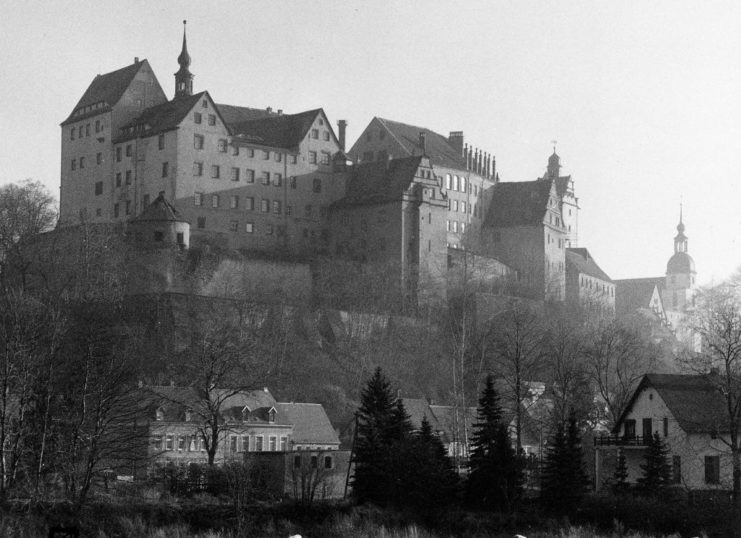
Of course, Rolt was included among these men. He was actually the mastermind behind a plan to build a glider within the roof of the chapel which could carry two prisoners to safety across the nearby river. He recruited a number of men to work on the project and by 1945 they had built a fully functioning plane. This intersected with the American advance on the castle, rendering their construction obsolete.
Racing career
For his continued efforts to escape from his German captors, Rolt was awarded a Bar for his Military Cross. He later resigned from service with the rank of Major. Having been pulled away from his racing career just as it was getting into gear, Rolt dove back in with a vengeance when he returned to England, racing in anything he could.
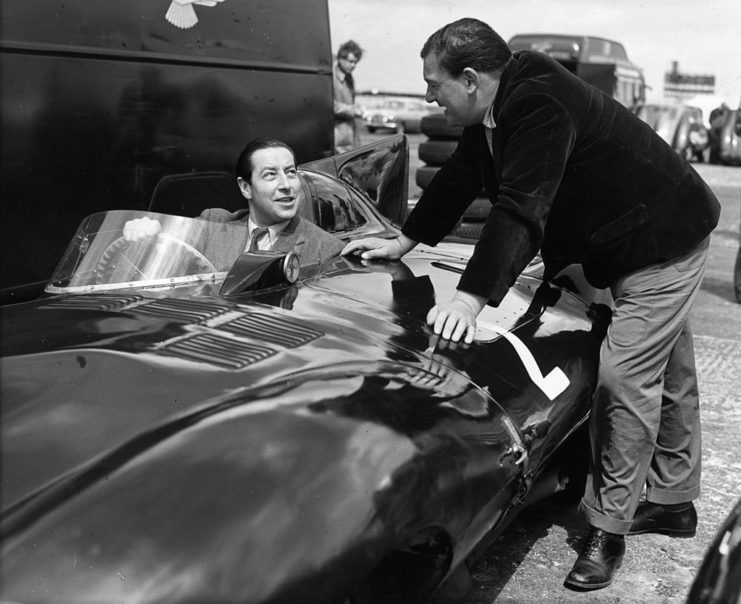
In addition to many other races, he competed in every 24 Hour Le Mans race between 1949 and 1955, winning in 1953. He and Duncan Hamilton, who drove with Rolt, had been disqualified that year but were eventually reinstated. According to Hamilton, the pair were already drunk in a bar by the time they were told they could come back and race. They won anyway.
More from us: 6-Star General: Only Two Individuals Have Been Promoted to the Prestigious Rank
By 1956, Rolt decided to retire from racing to work on the development of a 4WD racing car through the Ferguson development program. The war hero, race car driver, and engineer died on February 6, 2008, at the age of 89. He left behind many incredible life stories. Speaking about his father, Rolt’s son said, “The war definitely had an effect on him but after that he was determined to prove himself to the world and he did.”
The post Tony Rolt Escaped POW Camps Seven Times Before Becoming a Famous Race Car Driver appeared first on warhistoryonline.


Post a Comment
0 Comments